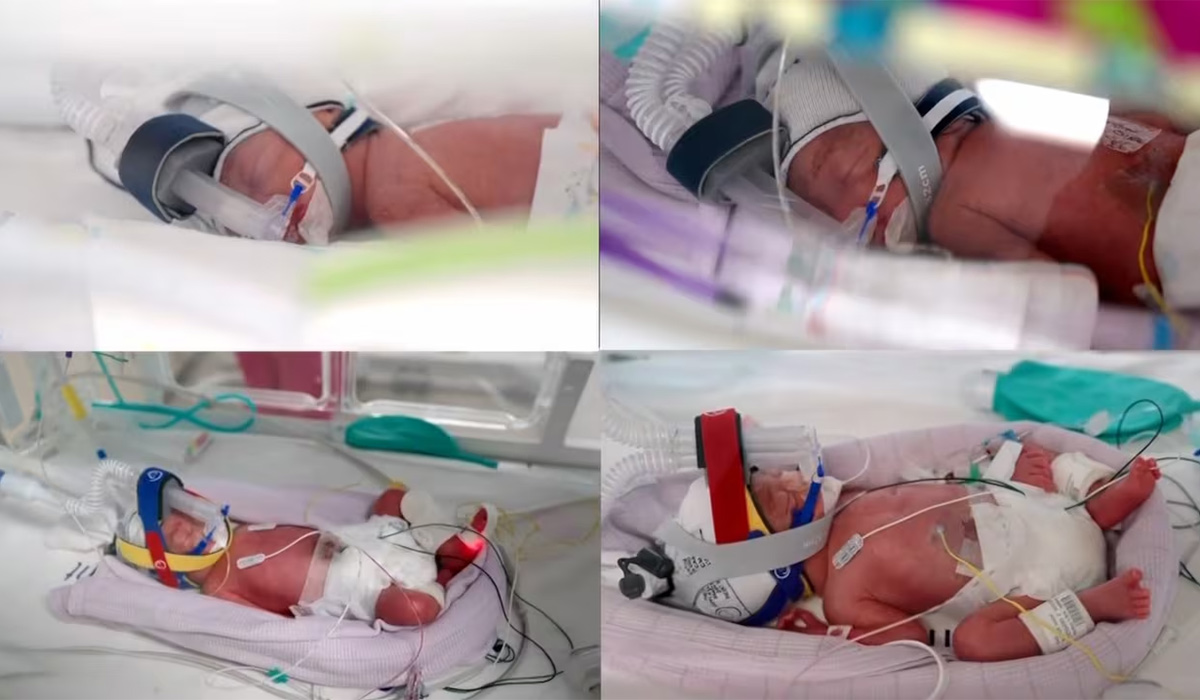
Conceiving quadruplets naturally is so rare it only happens in approximately one out of every 700,000 pregnancies.
Even rarer are monozygotic quadruplets – meaning all four babies developed from a single fertilised egg that split into four embryos. This, in fact, is so unheard of that experts call it a one in 15 million chance.
And yet, in what is being described by her doctors as an ‘unprecedented occurrence,’ this is exactly what happened recently to a mum in Brisbane, Australia, who has given birth to naturally conceived identical quadruplets.
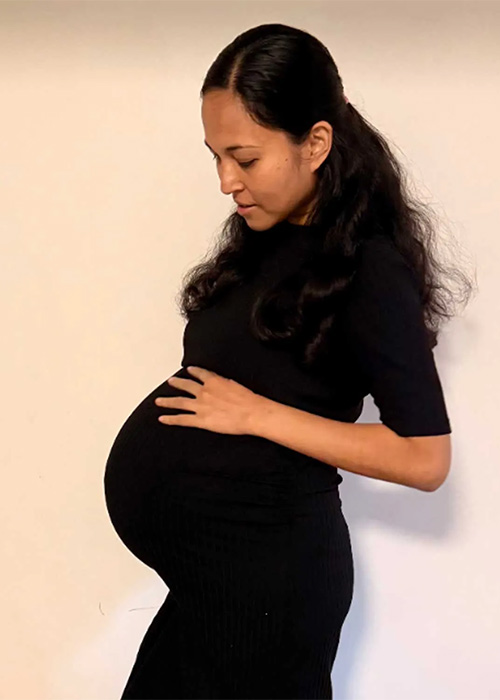
Australian identical quadruplets were ‘immense surprise’
34-year-old Jenitar Na’amoana, and her husband Jortham became parents of eight last week when Jenitar gave birth to identical quadruplet girls in one of the rarest births in the world.
The four girls, who were delivered via caesarean section at 28 weeks and four days at the Royal Brisbane and Women’s Hospital, are doing well, the hospital has confirmed. And they also revealed that the delighted parents, who already have four children at home, were taken by ‘immense surprise’ when told they were having quadruplets.
Speaking to the BBC, Dr Alexa Bendall, who cared for Na’amoana from the start of her pregnancy, estimated identical quadruplets occur ‘at one in every 15 million pregnancies’ and said ‘but to share the same placenta – this is unheard of.’
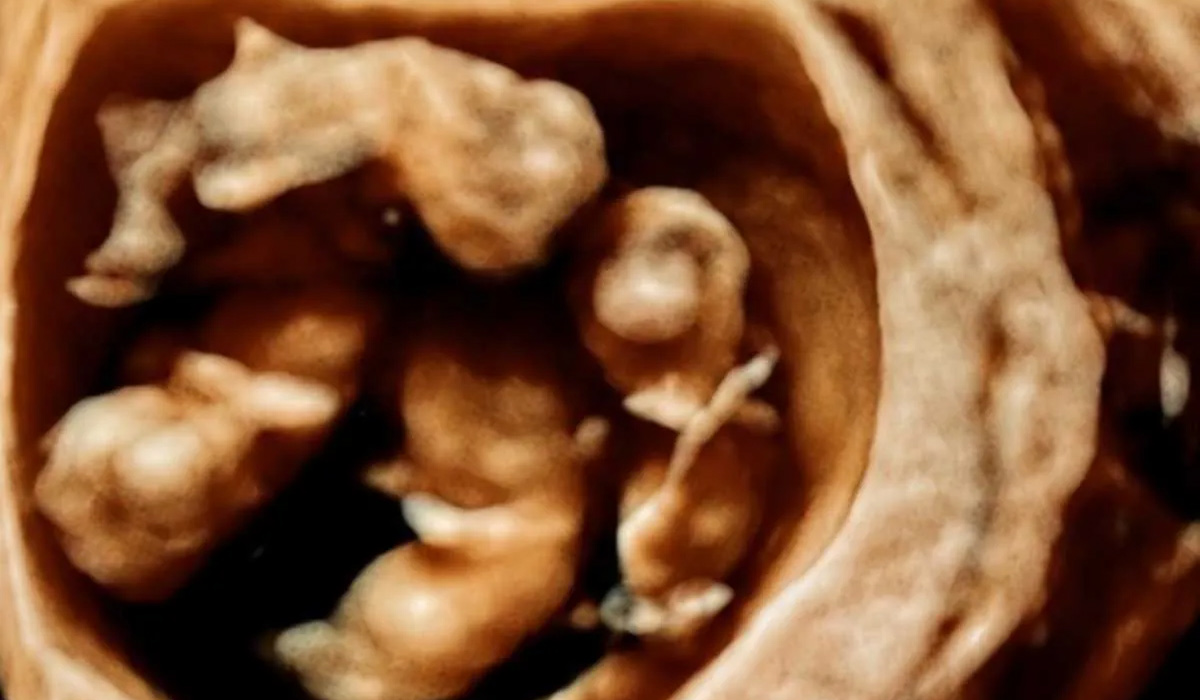
Dr Bendall, who is a foetal medicine specialist and obstetrician, said in a press release:
‘Jenitar has taken everything in her stride from day one – we have never seen a spontaneously conceived pregnancy of this type with quads, and she has somehow dodged every complication and risk for both herself and her babies to be here today, with four gorgeous newborn girls.’
It was Dr Bendall who made the call to admit Na’amoana to the hospital at 25 weeks so the doctor and her team could keep a close eye on her.
‘We always said that if we could get her to 28 weeks, we would be doing well, so we are happy she could make it to this gestation,’ Bendall said.
‘So the fact that we’ve got four beautiful, healthy babies born at 28 weeks and four days is incredible and we’re very happy to be a part of it.’
One baby named after doctor who delivered her
The Brisbane-based obstetrician explained that the newborn quadruplets will now spend time in the Royal Brisbane and Women’s Hospital’s specialist Neonatal Intensive Care Unit (NICU). where they will grow to full term.
The good news is that according to Dr Bendall, the babies ‘are currently doing extremely well’ and have been given the names Emily, Harriet, Catherine, and also Alexa, after Dr Bendall, who described the gesture as ‘a beautiful tribute.’
Following the birth of their surprise foursome, Jenitar and Jortham Na’amoana have set up a fundraiser, to help the parents, whose other children are aged between one and 10, buy a new van with ‘at least 10 seats.’
In a message on the fundraiser website, the mum-of-eight wrote:
‘Our four precious miracles have arrived safely, and while our hearts are overflowing with gratitude, the reality of caring for four newborns at once has brought challenges we never could have imagined.’
‘Layers of rarity’
Professor Rhona Mahony, fetal medicine specialist at the National Maternity Hospital here in Dublin, spoke about the Australian quadruplets on RTE Radio 1, and said:
‘It is really incredible, and really excting.’
She added:
‘There are layers of rarity to this. So the first thing is that this is a spontaneous conception. So quadruplets are extremely rare when conceived spontaneously. The vast majority arise from fertility treatment, either because of ovulation induction or because at least two or four embryos are transferred at the time of IVF.’
She added:
‘But these babies are entirely spontaneously conceived. And the next really rare thing that has happened here is that one embryo has managed to split into four genetically identical embryos. So that again is extraordinarily rare.’